The Challenge of Complex Food Matrices
Detecting allergens like peanut, soy, or gluten in processed foods is notoriously difficult. Unlike clean clinical samples (serum/buffer), food extracts are often viscous, high in fats, and loaded with proteins that cause non-specific binding. This leads to the “Matrix Interference” effect, often resulting in false positives or membrane clogging.
Why Standard Membranes Fail
Standard nitrocellulose membranes are hydrophobic. When a fatty food extract hits an untreated membrane, the flow rate drops unpredictably, and proteins aggregate at the test line. This is why many generic strips fail in food safety applications.
The Solution: High-Surfactant Treatment
At Due Bio, we address this challenge with our 2025-Gen Universal Lateral Flow Strips. Our proprietary manufacturing process includes:
- Optimized Surfactant Coating: Ensures consistent wicking even with high-viscosity samples (e.g., chocolate or dough extracts).
- Enhanced Blocking: A specialized buffer treatment that prevents non-specific binding of food proteins, ensuring a clean background.
- Robust Pad Materials: Pre-treated sample pads that filter out large particulates before they reach the analytical zone.
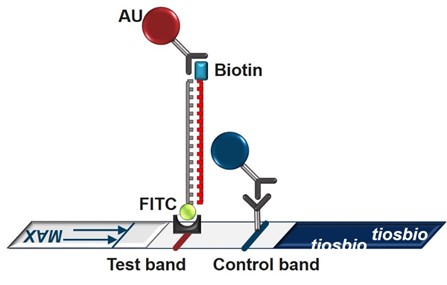
Case Study: Soybean Allergen Detection
In recent validation tests (referencing protocols similar to those used at PEI), our strips demonstrated a 99% success rate in maintaining flow speed with crude soybean extracts, significantly outperforming standard commercial membranes.
Developing a food safety assay? Request a “High-Surfactant” Sample Pack today.